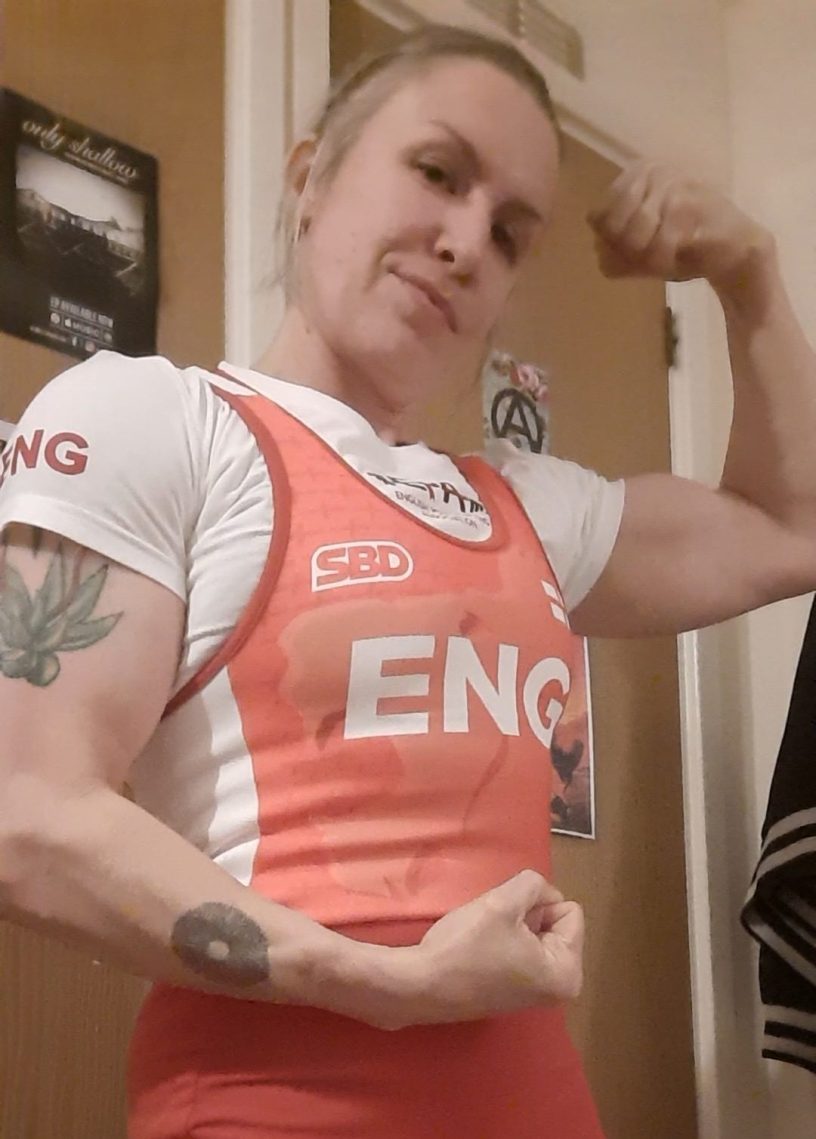
It’s now the night before I set off on my journey to the Commonwealth Powerlifting Championships! Ready to go!
In the last few weeks I’ve focused on some learning about Canadian history. Canada is a part of the Commonwealth that was settled by colonisers who stayed permanently. Some of my own relatives a couple of generations ago settled there. Indigenous people lived in Canada first and knew it, along with what is now the US, as Turtle Island.
The process of colonisation by Europeans, French, English, Scottish and more, saw indigenous people pushed onto reservations – far smaller pieces of land defined by treaties. This enabled access by the colonisers to valuable natural resources.
While colonisers got rich, indigenous people lost access to their home and essential food sources. Plains bison were overhunted to near extinction in the 1800s as capitalistic profit-seeking took hold.
There was also an ideological drive from British Protestants to ‘civilise’ indigenous people, which consisted of converting them to Christianity, and encouraging them to adopt European cultural and social values. The Canadian Parliament passed the ‘Gradual Civilization Act’ in 1857, which aimed towards the complete assimilation of indigenous people and their conversion to British citizens, at which point they would gain the right to vote. Tribal councils resisted this.
Part of the efforts to wipe out indigenous culture in Canada and replace it with European – now recognised as a genocide – was the establishment of residential schools, where indigenous children were taken away from their families to be ‘educated’ by settlers. These were quite literal hellholes, run by religious authorities and state funded. The children were banned from speaking their own languages, and received corporal punishment such as pins through the tongue if they did so. Children were frequently sexually abused. Around half of children who attended these schools might be expected to die, most often from disease such as tuberculosis. The estimated death toll was around 6000.
The residential schools system continued up into the 1980s, and most definitely was operating when my family members were there. In the late 2010s, textbooks for 3rd graders still gave a sanitised account of how indigenous people came to be a marginalised minority in their own land. Canada is celebrated for its universal healthcare system, but I have learned that this too is discriminatory and segregated in quite a stark material way, with less funding given to indigenous healthcare.
The discovery of mass unmarked graves by residential schools in 2021, prompted a period of shocked reckoning for the Canadian nation, and a Truth & Reconciliation Commission produced a document with calls to action over 500 pages long.
As a strength athlete and a fitness professional, I am struck reading through time how often starvation is used as a weapon of dehumanisation by colonisers. In India, in Ireland, in Canada, in Gaza. I count my macros and drink gym powders hoping for a bench press personal best.
In the 1940s and 50s nutritional experiments were conducted on deliberately underfed indigenous children in residential schools. Federal bureaucrats and scientists took advantage of their severe malnourishment to help determine the recommended daily dose of vitamins.
After all this heavy prep, lifting the lid on the past, I feel excited to meet the land of Canada and the people who live and lift there now. Winnipeg, where the Championships is taking place, was founded by Louis Riel, a Métis leader. Métis are people descended from both indigenous tribes and French settlers – other indigenous people might be known as First Nations or Inuit. I look forward to learning more about Winnipeg, and its General Strike of 1919.
One character in that strike, JS Woodsworth, helped to found something that caught my eye due to its name – the Cooperative Commonwealth Federation. This was a socialist organisation that preceded today’s New Democratic Party, Canada’s centre-left party. But in this sense, the word Commonwealth did not refer to the structure formed in the wake of the British Empire, but to the idea of an egalitarian co-operative commonwealth ‘in which the basic principle of regulating production, distribution and exchange will be the supplying of human needs instead of the making of profit’. I can get behind that kind of commonwealth.
In fitness and organised sport, human needs underpin everything. Universal access to safety, health, culture and nourishment is a must to enable the activities and competitions of our sector. Colonialism denies these rights to those dominated by it. Politics is connected with sport and all other parts of life. All people of the world are connected to each other through time, place and movement. We are unified by our needs, but while only some of us have our needs met, there can be no peace.
Further listening
Canada’s Darkest Secret: Residential Schools
Systemic Racism in Canadian Healthcare: The Tragedy of Brian Sinclair and Joyce Echaquan
 Take the Big Bag