
There’s less than 4 weeks to go now until the Commonwealth Powerlifting Championships. My team England tracksuit has arrived. You can’t tell in the above selfie but I’m loving my training, and focusing hard on rest and recovery. I’m excited for the huge privilege and honour to lift alongside some of the best from other countries – inspiring fellow athletes to look up to and share the platform with. I’m deeply grateful for the support of my friends, family and client community who are making this possible.
I’m also doing another kind of prep, that’s heavier than anything I’ll ever touch on a barbell.
Being an athlete is about being an all-rounder. We are competing as ambassadors for our country’s powerlifting federation, which is a big responsibility. It’s not just a physical way of life, but about the choices you make and the mentality you cultivate. Part of that for me is being socially conscious – taking an active interest in the political state of the world that our sport takes place within. Because the two things are not separate.
I’ve already been in full-on research mode for the past 2-3 years, working on the book I’ve been writing. Now I’m taking the opportunity of this competition to learn more about the history of the Commonwealth. What is this structure and where does it come from? What does it mean and why does it exist? Chatting to a friend the other evening he pointed out that he wouldn’t be here in the UK if not for the existence of the Commonwealth/the British Empire.
The Commonwealth is the organisation that remains in the shadow of the former British Empire. The British Empire isn’t something that we get taught much detail about in Britain. When I was at school, history tended to focus on ancient cultures and the 2nd World War, with a bit of WW1 poetry thrown in there.
This year’s World Cup saw a number of match ups between two nations where in the past one had been the coloniser and the other had been the colonised. To colonise is when one country or power forcefully takes control of a country or an area that’s not their own, and sends people to live there – to ‘settle’.
World Cup fans remarked on the interesting extra dynamic this added to those games, and the FT podcast even dedicated an episode to it. In a competition organised via the Commonwealth, this is the underlying dynamic of the whole event. So I couldn’t pass up this chance to do some self-education.
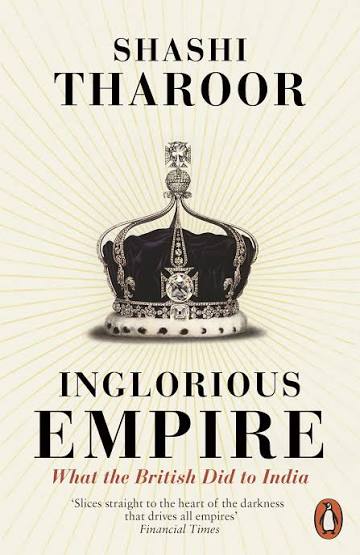
The first book that I wanted to read was Inglorious Empire: What the British Did to India by Shashi Tharoor (2016). As the current, ongoing genocide in Gaza reached the stage of famine, several pictures of the Bengal Famine which happened under British rule circulated on social media as a comparison. This was very recent, only 1943, so in living memory. Winston Churchill diverted food supplies away from starving civilians to well-supplied soldiers and European stockpiles.
Key lessons in this book
- India’s economy shrank massively during the 200 year time of British colonisation. The British deliberately sabotaged and ruined the Indian textile industry. Looms were smashed and heavy tariffs imposed on Indian textile, while the country was flooded with cheap British cloth.
- The British intentionally amplified divides among the Indian population for their own political benefits. Before colonisation, Hindus and Muslims had lived far more integrated lives. Under British rule, voting along religious lines was materially encouraged and caste differences were also solidified.
- The book talks about much cruelty and violence – brutally exemplified in the Jallianwala Bagh massacre, when an officer called Reginald Dyer ordered thousands of unarmed Indian civilians to be fired on and murdered or maimed without even a warning. I was never taught about this in school. I want to think about this incident every day.
- The book also explains the resistance movement and how the Indian people achieved freedom from British rule.
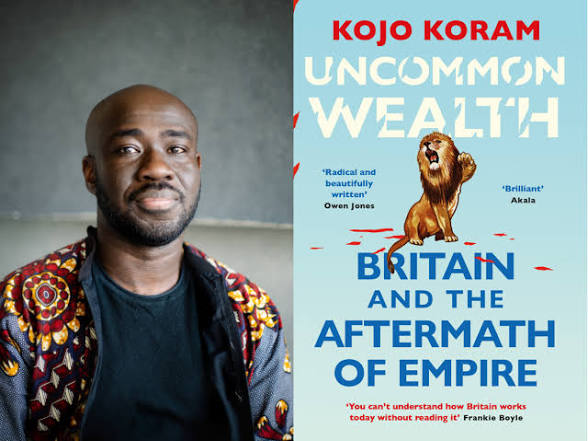
The next book I read was Uncommon Wealth by Kojo Koram (2022). This book looks at the Commonwealth as a whole. Koram argues that as Britain’s direct political control of its colonies ended, the powerful have structured the global financial system to ensure ongoing economic inequality, via heavy debts on poorer nations, and offshore tax evasion by the wealthy.
Key lessons in this book
- This book taught me a lot about Jamaican prime minister Michael Manley’s attempts in the 1970s to create a New International Economic Order. Ultimately neo-liberalism – the politics practised by Reagan and Thatcher – prevailed from the 1980s onwards.
- After gaining independence from Westminster, nations found a new location of conflict, in the form of multinational corporations. Many of these giant structures were built to serve the interests of the British Empire. Now we see them destabilising the British economy too, as our services and public assets are outsourced to private owners outside democratic control.
- In explaining this, Koram invokes the concept of the ‘Imperial Boomerang’: a colonial technology returning to impact the colonising nation at home. This concept originated in Discourse on Colonialism by Aimé Césaire.
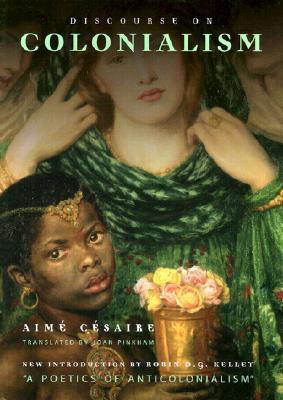
Discourse on Colonialism (1955) is an influential essay. Césaire argues that although European colonialism claimed to be promoting ‘civilisation’, it was an exercise in economic domination and exploitation. It also required a project of categorising and dehumanising the people who were being stripped of their culture and resources. Césaire condemns the brutality and immorality of colonisers. He also explains that the violence carried out in colonised countries corrupts the coloniser societies themselves.
- Césaire argues that as coloniser societies degraded their values to allow for acts of extreme brutality, it paved the way for fascism in Europe.
- The idea of the ‘Imperial Boomerang’ lives on in the present day, when high tech weaponry first tested by Israel on the Palestinian people is later used on civilians by the US government.
Here’s what the website of the British Royal Family says about the Commonwealth.
After 75 years of its existence, the Commonwealth is a remarkable organisation which remains a major force for change in the world today. It exists to foster international co-operation and trade links between people all over the world.
The Commonwealth is a voluntary association of 56 independent countries, almost all of which were formerly under British rule. The origins of the Commonwealth come from Britain’s former Empire. Many of the members of the Commonwealth were territories which had historically come under British rule at various times by settlement, conquest or cession.
The role of Head of the Commonwealth is not hereditary, however following an unanimous decision by Commonwealth leaders in 2018, following the death of Queen Elizabeth II, His Majesty The King became Head of the Commonwealth. This is an important symbolic and unifying role. As Head, His Majesty personally reinforces the links by which the Commonwealth joins people together from around the world.
In 1952, in preparation for a Commonwealth visit to New Zealand by Her Majesty the Queen, the Auckland City Council, in a misguided attempt to beautify the city, evicted the local Ngāti Whātua people from their village at Ōkahu Bay and burned it to the ground. This I only know about thanks to the song Ahi Ka by Maori band Alien Weaponry.
PART 2 – now here
I’ve also prepared a reading list about Canada. Family of mine a couple of generations ago moved to settle in Canada, the (multiply) colonised land where this year’s Commonwealth Powerlifting Championships is taking place. My next focus is to read up on the history and experience of the indigenous people around Winnipeg, Manitoba, as well as the part of Canada where my relatives moved to. I’ll share more here on this blog about what I learn, as well as what I learn about Winnipeg history on my trip. You can stay tuned by subscribing for updates.
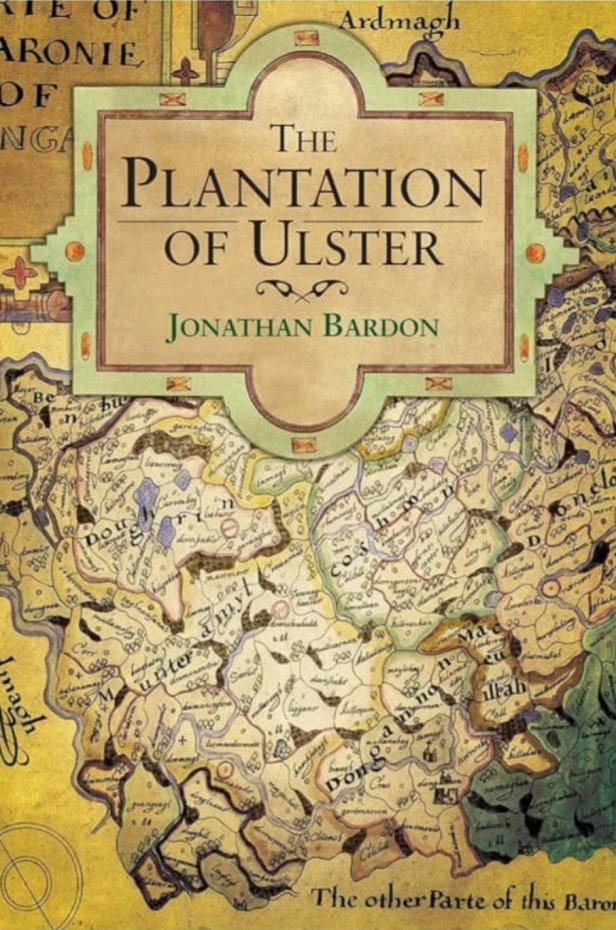
My other current read is The Plantation of Ulster by Jonathan Bardon (2011). This was the piece of land where I was born. This book explains the period of the 1600s when the English and Scottish first violently colonised the north of Ireland. So far famine as a weapon, and dehumanisation are both prominent features – a common thread that runs through old, recent, and present day colonialism. Nutrition, rights and dignity for all of humanity can and should be top concerns for the world of sport. And that is why as an athlete I look at politics.


Thank you Becca , for educating me on this important subject.
LikeLiked by 1 person
I appreciate you reading Farzana!
LikeLike